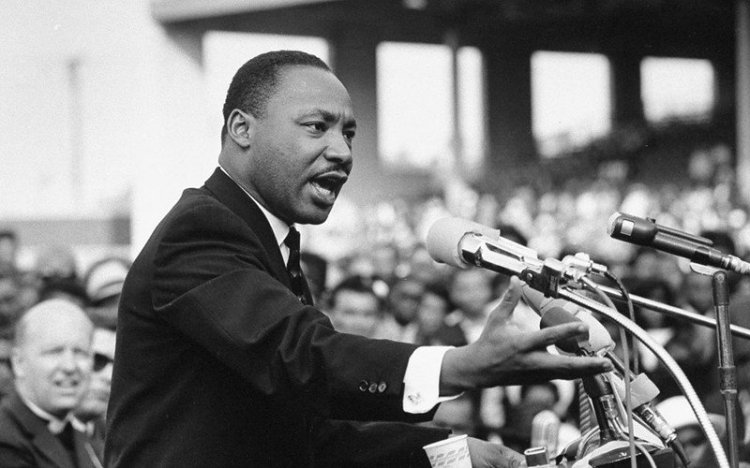
Rev. Dr. Martin Luther King Jr. was an American Baptist minister and activist, one of the most prominent leaders in the civil rights movement from 1955 until his assassination in 1968. An African American church leader and a son of early civil rights activist and minister Martin Luther King Sr., King advanced civil rights for people of color in the United States through nonviolence and civil disobedience. Inspired by his Christian beliefs and the nonviolent activism of Mahatma Gandhi, he led targeted, nonviolent resistance against Jim Crow laws and other forms of discrimination. His adoption of nonviolent resistance to achieve equal rights for Black Americans earned him the Nobel Peace Prize in 1964.
King oversaw the 1955 Montgomery bus boycott and later became the first president of the Southern Christian Leadership Conference. He was one of the leaders of the 1963 March on Washington, where he delivered his “I Have a Dream” speech on the steps of the Lincoln Memorial. The civil rights movement which he helped lead, achieved pivotal legislative gains in the Civil Rights Act of 1964, Voting Rights Act of 1965, and the Fair Housing Act of 1968.
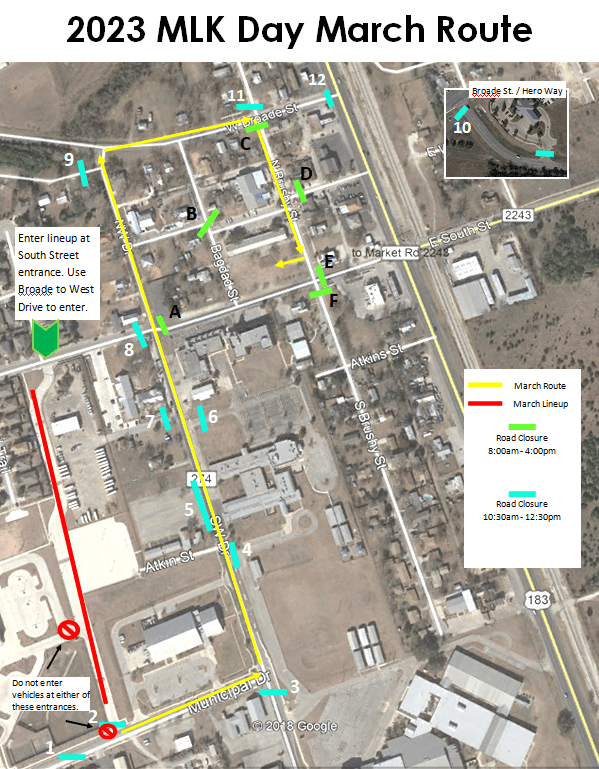
Throughout this period, Dr. King participated in and led marches for the right to vote, desegregation, labor rights, and other civil rights. They were key to these legislative successes. The purpose of these marches was to bring public attention to the injustices occurring in the Black communities, and other communities of color. They shined a light into the dark corners of society. Today, we are marching to honor King’s legacy, to acknowledge the significant work yet to be done so that all people can live to their full potential, and to express our personal values and desires for a more just community.
It’s been said that the heart can’t feel what the eyes don’t see. When we march, it creates the opportunity for people to see. Let’s make a difference together!
 Leander Democrats Together